Portable Bluetooth Speakers

FCC Revokes Authorization of More Chinese Telecom Providers


FCC Revokes Authorization of More Chinese Telecom Providers

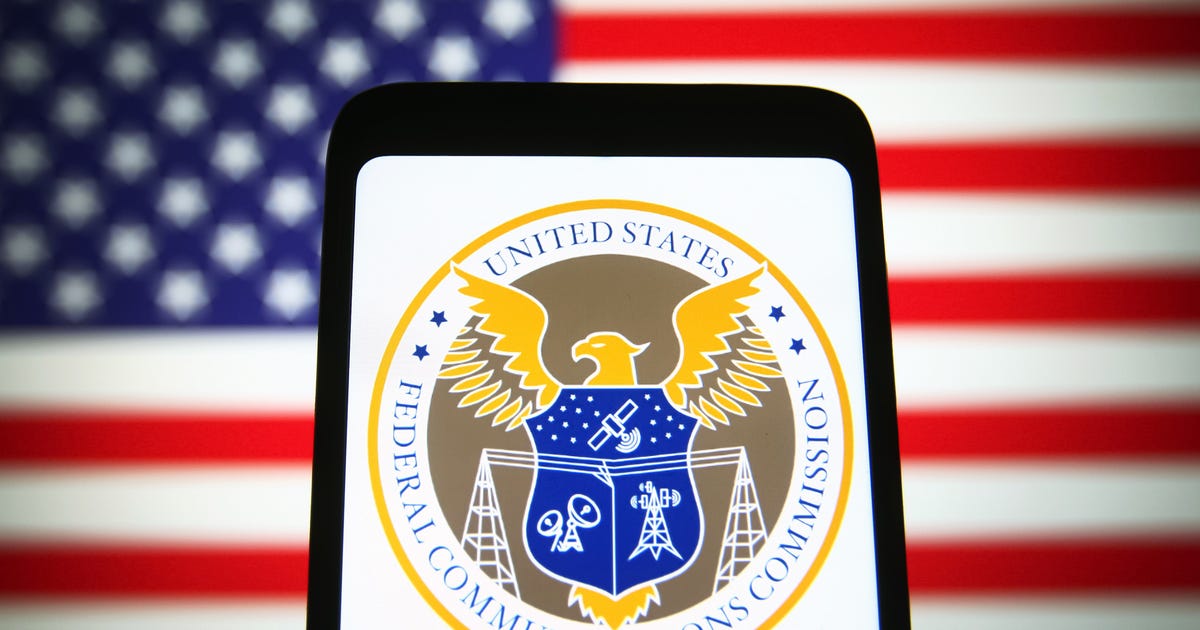
The Federal Communications Commission banned two more Chinese-owned telecommunication companies from operating in the US market, as it continues to be wary that companies with ties to the Chinese government could pose national security threats. 

In a 4-0 vote on Wednesday, the agency barred Pacific Networks and its wholly owned subsidiary ComNet from providing domestic and international service to customers in the US.  The move is the latest in a series of actions the FCC has taken to guard against potential espionage in US communications networks from China. In January, the FCC revoked China Unicom's authorization to operate in the US, and last year did the same for China Telecom Americas. It has also banned gear from telecommunications companies Huawei and ZTE. 

The agency's vote on Wednesday is part of a greater effort by the US government to crack down on China's role in US telecommunications, amid concerns that equipment or services operated by Chinese companies with close ties to the Chinese government could be used to gather intelligence and spy on Americans.

The move is another indication that President Joe Biden is following a similar hard-line policy toward China to that of his predecessor, President Donald Trump, who also banned 5G wireless technology from Chinese companies. 

National security agencies have warned for years of the dangers of using gear from Chinese companies, such as Huawei and ZTE, and of letting Chinese telecommunications service providers operate in the US. Politicians on Capitol Hill have been sounding the alarm, too.

FCC Chair Jessica Rosenworcel said the agency's actions are part of a greater effort to ensure that Americans trust the security of the US communications networks. 

"Communications networks depend on trust," she said. "That's why during the past year the Federal Communications Commission has made it a priority to increase trust with a series of initiatives to support network security."

Chinese officials have long denied allegations that state-owned companies are being used for espionage in the US. They say that there is no evidence to support the US claims and that the bans are a tactic to stifle competition from Chinese companies. 

"The US has flagrantly overstretched the concept of national security and abused state power to hobble a Chinese company, which gravely undermines international trade rules and hurts the legitimate rights and interests of global consumers including those in the US," said Chinese Foreign Ministry spokesman Zhao Lijian, during a press conference in January. "The Chinese government supports companies concerned in defending their own interests in accordance with law, and will continue to take necessary measures to resolutely safeguard the legitimate rights and interests of Chinese companies."


Source

Tags:


Save $150 Off Apple's Recently Discontinued 256GB iPad Air 4 at Amazon Now


Save $150 Off Apple's Recently Discontinued 256GB iPad Air 4 at Amazon Now

Apple has released a new iPad Air, which means significant discounts are rolling out for the previous model. During its "Peek Performance" event in March, the company announced an all-new iPad Air 2022 to replace the iPad Air 4, which had been on the market for about two years. The newest model dropped at the Apple Store and other retailers March 18, but right now you can save $150 off the 256GB version of the fourth-generation iPad Air at Amazon, meaning you can pick one up today for just $600.

Part of the savings for this deal is an on-page discount, which automatically applies when you add the iPad Air to your cart and head to the checkout page. Previous versions of these at-checkout discounts have often not lasted long, so you may not want to wait too long before deciding whether this is the iPad for you. 

The new iPad Air uses Apple's M1 chip and has a new front-facing camera along with an optional 5G connection if you opt for cellular connectivity. Unless you plan to be doing resource-intensive activities on your iPad, like heavy games, photo editing and the like, the previous-gen iPad Air is likely more than enough for you. It's great for games, video chats, web browsing, social media, document creation and more. There are great keyboard attachments available, and you can pair it with a discounted Apple Pencil to take your experience to the next level.

Read more: iPad Air 2022 vs iPad Pro 2021: Which M1 Tablet is Best?

Looking for a different iPad model? Be sure to check out all the best iPad deals available today.


Source

Tags:


Coca-Cola Byte Is Now Available. Here's Where to Buy Coke's New Pixel Drink


Coca-Cola Byte Is Now Available. Here's Where to Buy Coke's New Pixel Drink

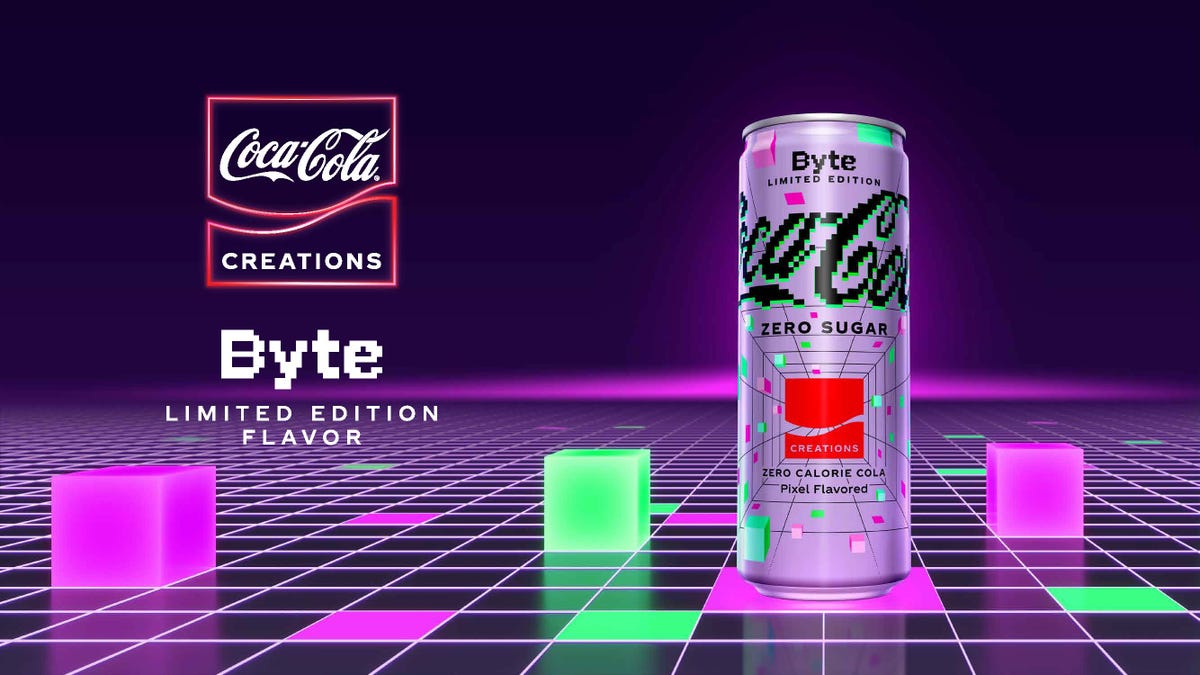
Coca-Cola's brand-new flavor is now available, and it tastes nothing like the Starlight "space" flavored Coke that was released in February. It's called Coca-Cola Zero Sugar Byte and according to the soda giant, it tastes like pixels. I decided to give it a try, because who doesn't want to taste pixels? 

The company says it's the first Coca-Cola flavor born in the metaverse and that it's been hidden in plain sight. "An early look at the beverage appeared in a new island created in Fortnite," Coca-Cola said.

"What I find especially exciting about this Coke Creation is the intentional air of mystery in defining the taste of a pixel," Oana Vlad, Coca-Cola's senior director of strategy, told me. "We know that any new Coca-Cola Creations expression will provoke debate and curiosity, which we welcome."

Coca-Cola said it'll release more limited-edition beverages later this year, but the company expects Byte to be the drop of the season. Here's what you need to know about the new Coke Byte.

Here's how my Coke Byte taste test went

I received a tall, slender can of Coca-Cola's new Byte Coke and upon opening it, it had quite a loud fizz -- much more carbonation than the Starlight Coke. This one has a brown hue like a regular Coke Zero (I expected it to be purple), with a very sweet smell. When I took a sip of the Coke Byte, the fizziness was so strong that it reminded me of when I would eat Pop Rocks as a kid. Maybe that's what pixels taste like? The flavor was soft but still tasted like a Coke Zero. I could taste the sweetener used to replace the sugar... possibly Splenda? 

See my experience with the Coca-Cola Starlight "space" flavored drink, which I thought tasted like a ginger soda. If I had to choose between the two, Coca-Cola Zero Sugar Byte would be my choice, since the flavor is more normal.

Can I buy the Coca-Cola Byte now?

Yes. Coke's new Byte drink went on sale May 2 and you can now buy a two-pack for $14.77, with a max of three boxes per customer. Note that you may have to wait in line to grab yours.

Where can I buy Coke Byte?

Though Starlight was available in stores, Coca-Cola Byte is only available for purchase on Coke's website, at the link above. The company says it'll be available in "super limited quantity" on a first-come, first-served basis.

How long will the pixel-flavored Coke be around?

Coca-Cola Zero Sugar Byte will be available in extremely limited quantities, and the portal for purchase will be open only for a limited period of time while supplies last. 

coca-cola byte can with limited edition branding

Coca-Cola Byte will come in packs of two.

Coca-Cola

Why did Coca-Cola come out with a pixel-flavored drink?

Coca-Cola says it was inspired by the creativity of the global gaming community and decided to create Coca-Cola Zero Sugar Byte to bring the flavor of pixels to life.

"This new Coca-Cola Creations flavor is an amazing nod to gamers from one of the most iconic brands in existence," Lachlan Power, a professional gamer and founder of esports team PWR, said in the press release.

What's on Coke Byte's Fortnite island?

The Fortnite Pixel Point island is an area in the game where you can interact with other players. It has four multiplayer minigames: The Castle, The Escape, The Race and The Tower.

What is the Coca-Cola AR game?

In addition to the Fortnite Pixel Point island, Coca-Cola is launching an augmented reality experience. You'll be able to access it by scanning a Byte Coke on the Coca-Cola Creations website.

Here's how Coca-Cola describes it: "The game tells the story of BYTE, an 8-bit pixel who was left behind when Coca-Cola Byte entered the metaverse. Using fingers to hold down arrows, players will guide BYTE to 'jump' up a spiral staircase so the lone pixel can rejoin the Coca-Cola logo. Players' finish times will be recorded in a virtual leaderboard that can be shared on social media."

For more on soda, check out this limited-edition Pepsi Maple Syrup Cola. And here's more about the metaverse.


Source

Tags:


How to move music with Alexa on Amazon Echo devices


How to move music with Alexa on Amazon Echo devices

Despite all the attention around Alexa, Amazon's Echo speakers are first and foremost speakers. You can stream music from platforms like Spotify, Amazon Music, iHeartRadio, Pandora and more.

Now, you can take that music with your from room to room or even from room to car to earbuds. Asking Alexa to move your audio to another device, group or room is a great way to manage tunes hands free. Here's how it works. 

Moving between devices

Chances are you might play music on other Echo devices that aren't speakers or on your smartphone. Moving audio works on these devices, too. 

For Echo Buds, you'll want to put in your buds, connect them to your phone and ask, "Alexa, move my music here." 

If you have an Echo Auto in your car, you can move music by saying, "Alexa, pause" to the speaker in your home. Once you're in your car with your phone connected to the Echo Auto, ask "Alexa, resume music." 

Moving from Echo speaker to Echo speaker throughout your house is simple, too. Say, "Alexa, pause" to the device playing, followed by "Alexa, resume music here" or "Alexa, resume radio here" to the device you want to move music to. 

Read more: Black Friday 2021 ad scans: Walmart, Staples, Target, Best Buy and more | Best Alexa devices to buy in 2021

Moving between groups

If you have multiple Amazon Echo speakers in your home, chances are you've added them to a group like "living room" or "kitchen."  You can move audio between groups just like moving it between devices devices. Say, "Alexa, move my podcast to the kitchen" or "Alexa, move my music to the kitchen."  

These audio moving tips will help you seamlessly enjoy your tunes and podcasts without lifting a finger. Google's Nest Mini smart speakers and Apple's HomePod Mini can also transfer audio between devices.

If you think a smart speaker, smart display or shiny new headphones might make a good gift for the music lover on your list, be sure to check out our Black Friday deals roundups from Target, Walmart, Best Buy and more. 


Source

Tags:


Ransomware rises as a national security threat as bigger targets fall


Ransomware rises as a national security threat as bigger targets fall

Cybercriminals are getting more sophisticated and brazen in ransomware attacks, freezing computer systems at school districts, major universities, police departments and hospitals. Now the US government is stepping up its approach to fighting computer crimes. 

Last week, the White House convened an international counter-ransomware event. Representatives from more than 30 countries, including big US allies like the UK, Canada and Japan, participated in the virtual gathering. Notably absent: Russia, which the US and other countries blame for harboring and possibly encouraging the groups behind the attacks.

The group pledged to share information and work together to track down and prosecute the cybercriminals behind ransomware attacks. "Governments recognize the need for urgent action, common priorities, and complementary efforts to reduce the risk of ransomware," the participants said in a joint statement released at the end of the meeting.

The high-level government attention to ransomware underscores its growing reach. Once nothing more than garbage malware locking up the hard drives of the tech unsavvy or of small businesses running dated versions of Windows, ransomware has become a global digital scourge.

It also shows no sign of letting up. Over the weekend, an apparent ransomware attack locked down servers and work stations at Sinclair Broadcast Group. Data also was stolen from the TV station operator, though it's currently unclear what information it contained. The company is investigating.

Earlier this year, a major oil pipeline and a huge meat processors were hit by cybercriminals who demanded millions of dollars in ransom.  The attacks on Colonial Pipeline and JBS USA Holdings made headlines for weeks. They also marked a rise in the ambitions of cybercriminals and caught the attention of government officials and cybersecurity experts. 

"It's really become a national security threat," Jen Easterly, director of the Cybersecurity and Infrastructure Security Agency, told the Billington Cybersecurity Summit last week. "Everything is connected, everything is vulnerable, and the threat actors are just getting more sophisticated."

According to a report issued Oct. 15 by the Department of the Treasury, suspected ransomware payments reported by banks and other financial institutions totaled $590 million for the first six months of this year, easily surpassing the $416 million in suspicious payments reported for all of 2020.  

Colonial Pipeline and JBS both forked over millions in ransom payments during that six-month period. The FBI was able to recover about $2.3 million of the $4.4 million paid by Colonial. Both ransoms were paid in bitcoin, a popular cryptocurrency. 

Both attacks wreaked temporary havoc, pushing up the price of gasoline and meat as the companies lost control of their supplies.

"It's amusing to the outside world that America doesn't care until it's about oil and meat," says Chester Wisniewski, a principal research scientist for the global cybersecurity firm Sophos.

Wisniewski says earlier attacks would target a dozen or so different entities. They didn't grab the same kind of national headlines, however, because they were separate, smaller attacks.

By today's standards, cybercriminals also weren't as talented. They bought the malware online and sent it out without much research into their targets. Companies would often pay the ransom, try to keep things quiet and move on.

That started to change a few years ago. As malware became more sophisticated, cybercriminals began hacking into a company's financial records to determine exactly how much money the company would likely be able to pay. Now ransoms often reach millions of dollars.

And other attack-related costs far outweigh the actual ransom. Even if a company pays and has its data restored, it still has to bring in experts to rebuild its systems and confirm they're no longer compromised. 

On top of that, an attack usually prompts a company to upgrade its cybersecurity defenses, another cost. 

Sometimes it can be tough for an entity to know exactly how much cybersecurity it should install. Even though JBS is a big company, many experts wouldn't have previously considered it to be an obvious target for a cyberattack.

While acknowledging in a June statement that it did pay the equivalent of $11 million in ransom, JBS said it was able to "quickly resolve" the issues resulting from the attack, thanks to its "cybersecurity protocols, redundant systems and encrypted backup servers," adding that it spends $200 million annually on IT and employs more than 850 IT people around the world. The company didn't immediately return an email seeking further comment for this story.

Even small companies should follow best practices that'll lessen the chances of a cyberattack or the fallout from one, says David Cowen, managing director of US Cyber Security Services at professional-services company KPMG. And those practices can be as simple as making sure employees protect their access to systems with strong passwords and always use two-factor authentication

The government can help, too, he says.

"Look at what happened with Colonial Pipeline," Cowen said. "That group initially got paid but then they got tracked down and some of the money got returned. That's what happens when the government gets involved."

A recently introduced Senate bill would require critical infrastructure owners and operators, which would include companies like Colonial Pipeline, to report cyberattacks within three days.

In addition, nonprofits, businesses with more than 50 employees, and state and local governments would be required to notify the federal government within 24 hours if they make ransom payments.

Meanwhile, the Treasury Department says it'll sanction cryptocurrency exchanges, insurance companies and financial institutions that facilitate ransomware payments. It also said it was taking action against virtual currency exchange SUEX OTC for allegedly facilitating ransomware payments. Officials for SUEX couldn't be reached for comment.

Wisniewski, the cybersecurity researcher, says he likes the idea but questions how much good it'll do if the government doesn't take action against the countries behind the exchanges and financial institutions.

"Are we going to sanction China?" he asked. "I don't think so."


Source

Tags:


Nothing Phone 1 Won't Be Coming to the US


Nothing Phone 1 Won't Be Coming to the US

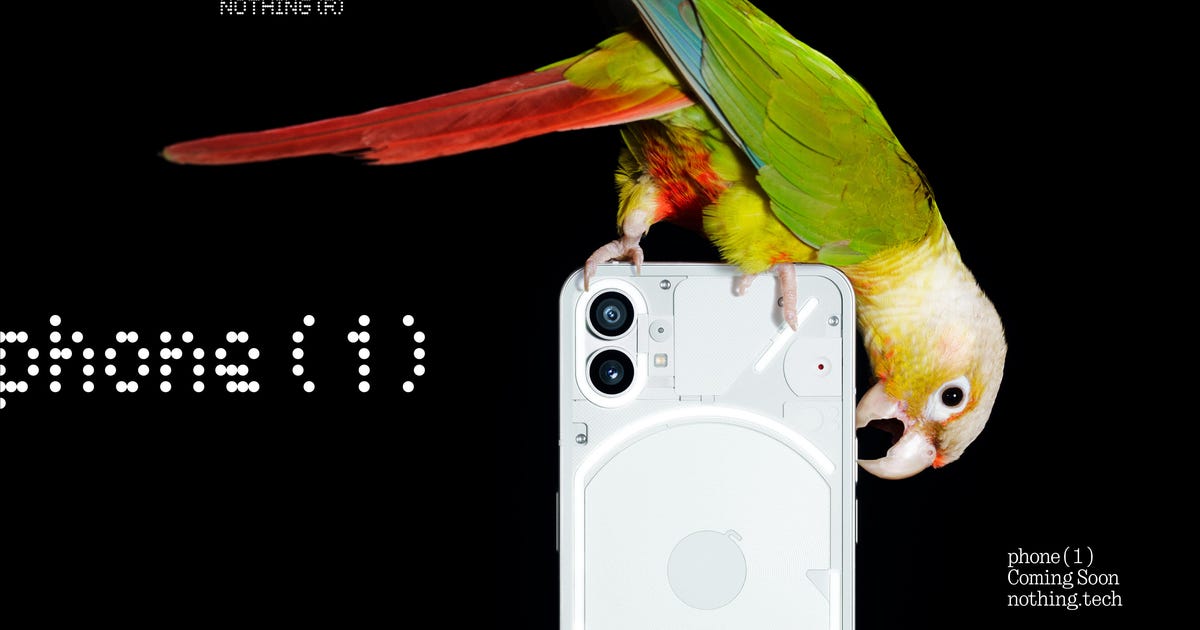
London-based startup Nothing is launching its first smartphone, Phone 1, on July 12. However, Americans who were eagerly anticipating the launch will be disappointed -- the phone won't be available in the US, the company confirmed to CNET. Leaker Evan Blass noted the absence earlier this week.

"Whilst we'd love to bring our second product to the entire community around the world, we will be focusing on home markets, including the UK and across Europe where we have strong partnerships with leading local carriers," a Nothing spokesperson said in a statement. The phone will reportedly skip Canada, too.

Nothing is "definitely aiming to launch a US-supported mobile in the future," the spokesperson added, noting that a number of investors will be able to buy the Phone 1 in the US in a "closed beta program."

After launching in January 2021, Nothing released its first product, a pair of headphones called Ear 1. Its products' design have been marked by clear exteriors that provide a view of their innards

Founder Carl Pei, who also co-founded OnePlus, has a history of designing high-quality phones that are cheaper than their rivals and has said Phone 1 will rival the iPhone. The phone will run on the Android-based Nothing OS and be powered by a Qualcomm Snapdragon chip.


Source

Tags:


How the PC industry killed the ultrabook


How the PC industry killed the ultrabook

commentary Well, it was fun while it lasted.

The personal computer industry backed a promising candidate in the ultrabook concept, convincing even a skeptic like myself that a new class of superslim, superlight laptops was the key to exciting consumers. Ultrabooks were well on their way to becoming the PC form factor of the future.

And now, it's already over.

In record time -- something less than six months -- the ultrabook term has become so overused and amorphous that it's well on its way to being useless.

Liberal terminology
The first major examples of this new ultrabook rift are two laptops we recently reviewed. The HP Envy 14 Spectreand the Samsung Series 5 Ultra are both 14-inch laptops pitched as ultrabooks. The idea of bringing the ultrabook concept to larger laptops is a reasonable one -- the initial wave of ultrabooks were all 13-inch systems -- but they need to be nearly as thin and lightweight as the 13-inch models.

Instead, both the HP Spectre and Samsung Series 5 Ultra weigh a hair under 4 pounds, about a full pound more than a 13-inch MacBook Air. Both are also about one-tenth of an inch thicker. That may not sound like much, but when less than an inch is your baseline, it makes a noticeable difference in the feel of the laptop in your hand.

The biggest deviation from the ultrabook model to date is the 14-inch Samsung's use of a standard 500GB platter hard drive. The ultrabook platform is supposed to be built around faster, lighter solid-state drives (SSDs), and Samsung includes a tiny 16GB SSD as a secondary drive, which allows it to meet the letter, if not the spirit, of the ultrabook specifications. This system also includes an optical drive, which is another difference from previous ultrabooks.

It's relatively thin and light, but should it be an ultrabook? CNET

What you end up with, especially in the case of the Series 5 Ultra, is a perfectly fine midsize, mainstream laptop that can stand toe to toe with anything similar in the $850-$950 range. If we had seen it eight months or a year ago, our initial impression would be, "Wow, that's a pretty thin 14-inch laptop."

But today, there's absolutely nothing about it that says "ultrabook," which is bad news for this promising new category.

The origins of ultrabook
So, what is an ultrabook supposed to be, anyway?

Seeing the success of Apple's MacBook Air, Intel and PC manufacturers wanted to find a way to replicate it for Windows-based consumers in systems that could be sold at a reasonable price. The idea was pitched as an entirely new laptop category, although the name "Ultrabook" was a trademarked Intel marketing term, and the systems that were going to use it had to meet a series of Intel-set system requirements.

In fact, Intel even set aside $300 million to help PC makers develop these new systems, saying in August 2011 that it would "invest in companies building hardware and software technologies focused on enhancing how people interact with Ultrabooks such as through sensors and touch, achieving all-day usage through longer battery life, enabling innovative physical designs, and improved storage capacity."

The $799 Toshiba Z835. CNET

From that original big idea, and the subsequent challenge Intel presented to PC makers, came the first generation of laptops to use the ultrabook name. These systems, from companies such as Acer, Lenovo, Toshiba, and Asus, came off very well in our initial reviews and we were surprisingly impressed with the platform, especially as prices declined, offering buyers systems with 128GB SSD drives for as little as $799.

Ultrabooks 2012: From noteworthy to no big deal
But a few months ago, at CES 2012, I warned that the road ahead looked foggy, saying: "The ultrabook is in danger of being oversold by both Intel and industry watchers overeager to get behind the Next Big Thing."

And that seems to be exactly what is happening here. The ultrabook idea was a hit. It even seemed to have high name recognition with CNET readers, who would e-mail us with specific questions about which ultrabook they should buy. Now, everyone's rushing to join the bandwagon and the bigger 14- and even 15-inch ultrabooks hitting stores feel like they dilute the concept far too much.

For an example of this kind of branding done right, think back to the early days of wireless networks, when Intel's Centrino name meant that a laptop was able to connect to Wi-Fi and do most of the other networking things you needed it to, without you having to delve too deeply into the spec sheet.

In this case, instead of looking for an Intel ultrabook sticker on a laptop and knowing that it's going to be very thin, very light, rely on SSD storage, boot quickly, and run for a long time on a battery charge, now consumers will have to go back to checking the size and weight specs carefully.

How is that helpful for anybody?

Expect to see more laptops that look like this. CNET

The ultrabook is dead; long live the new laptop order
But the ultrabook, as originally presented, is still an idea whose time has come. Apple's MacBook Air proved that consumers could live without optical drives and large-capacity hard drives, and valued long battery life and portability over ports and connections (in that sense, systems such as the Dell Adamo were ahead of their time). Also, ultrabook branding is certainly not going away anytime soon, and we'll all see dozens of new ultrathin laptops both with the ultrabook label and without during the rest of 2012.

The real long-term victory is that the ultrabook is rewriting what it means to be a mainstream laptop. By this time next year, I find it hard to believe that any midprice, midsize laptop won't be well under 1 inch, and closer to 3 pounds than 4 or 5. Optical drives will continue to fade away, as will dedicated Ethernet jacks (although I'm still convinced you'll eventually need one in a pinch). If you're a PC maker and most of your future laptops aren't at least trending toward ultrabooks and the MacBook Air, you simply won't be in the game.

So, yeah: I'm no longer sure what "ultrabook" means anymore. But if most future laptops are going to be thinner, lighter, and faster -- whether or not they get an Intel-approved sticker -- maybe that's not such a bad thing.


Source

Tags:

Search This Blog

Menu Halaman Statis

close